
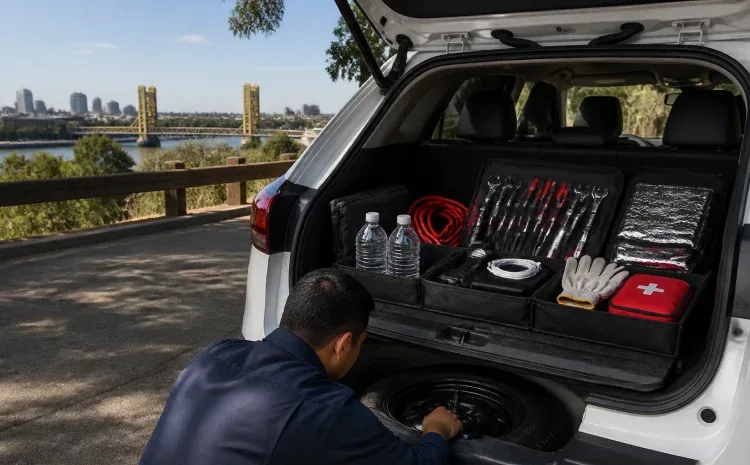
Should You Actually Buy That “Road Trip Survival Kit”? A Sacramento Mechanic’s Honest Breakdown
Road trip survival kits look useful. Some are useful. Others are mostly a bright red bag filled with low-quality gadgets you may never use.
Before you hit the road from Sacramento, build your kit around real roadside problems. Prepare for a dead battery, flat tire, overheated engine, poor visibility, or a long wait for help. Skip the gimmicks.
Here is the honest answer from a Sacramento mechanic:
- Yes, buy or build an emergency kit.
- No, do not assume the biggest kit is the best kit.
- Always inspect your vehicle before a long drive.
- Keep reliable tools, not marketing fluff.
A $150 emergency kit cannot compensate for worn tires, a weak battery, or low coolant. The best road trip kit is a well-maintained car.
Start with the vehicle, not the shopping cart
Emergency equipment helps you manage a problem. Preventive maintenance helps you avoid the problem.
Schedule a vehicle maintenance and inspection appointment before a long trip. At BMP Auto Service, our ASE-certified technicians inspect the systems most likely to affect safety and reliability:
- Tires, tread depth, pressure, cracks, and bulges
- Spare tire, jack, and lug wrench
- Brakes, rotors, and brake fluid
- Battery condition and charging system
- Engine oil and coolant levels
- Belts, hoses, and visible leaks
- Headlights, brake lights, turn signals, and hazards
- Windshield wipers and washer fluid
- Air conditioning and heating performance
- Warning lights and stored computer faults
This matters in Sacramento. Summer heat puts extra stress on batteries, tires, cooling systems, and air conditioning components. A vehicle that feels fine on a short commute can reveal a problem after hours on I-5, Highway 50, or a mountain route toward Tahoe.
Accurate inspection. Honest advice. Fewer surprises.
What a good road trip survival kit should include
You do not need to buy everything at once. Start with the items that solve common problems and protect you while you wait for assistance.
1. Jumper cables or a portable jump starter
A dead battery can leave you stranded in a parking lot, at a rest stop, or outside a hotel. Carry heavy-duty jumper cables if another vehicle can help. Choose a portable jump starter if you want a self-contained option.
A jump starter costs more. It also gives you more independence.
Check its charge before every major trip. Store it where you can reach it. Do not bury it under luggage.
Worth buying: Yes.
2. A spare tire, jack, and lug wrench
This is the item many drivers forget to check. Your car may have a spare tire, but that does not mean it is ready for use.
Inspect the spare’s air pressure and condition. Confirm that the jack and lug wrench are present. Make sure the wrench fits your lug nuts. Some newer vehicles include an inflator and sealant instead of a spare. Know which system your vehicle uses before leaving Sacramento.
A tire pressure gauge and compact inflator add extra value. They can help with a slow leak, but they cannot safely repair every puncture.
Never drive on a damaged tire just because it still holds some air.
Worth buying: Absolutely. Verify what your vehicle already includes first.
3. Basic tools
Keep the tool selection simple:
- Pliers
- Flathead and Phillips screwdrivers
- Adjustable wrench
- Multitool
- Tire pressure gauge
- Work gloves
- Duct tape
- Zip ties
These tools can help secure a loose splash shield, remove a battery terminal cover, or handle a minor temporary repair. They will not rebuild an engine on the shoulder of the highway. That is where professional vehicle diagnostics becomes important.
Use tools for temporary solutions only. Arrange a proper repair as soon as possible.
Worth buying: Yes, if the tools are sturdy and vehicle-appropriate.
4. Water and nonperishable snacks
Carry drinking water for everyone in the vehicle. Add shelf-stable snacks such as granola bars, nuts, or crackers.
Water may also help with basic cleanup, but do not pour cold water into an overheated engine. Do not open a hot radiator or coolant reservoir. Serious burns can result.
For longer trips, especially through areas with limited services, carry more than you think you need.
Worth buying: Yes. Replace stored water and snacks regularly.
5. A phone charger and backup power bank
A dead phone can turn a manageable delay into a serious problem. Keep a vehicle charger in the car and carry a charged power bank.
Save important numbers before you leave. Include your roadside assistance provider, insurance company, and a trusted repair shop. If your vehicle stops on a busy road, move to a safe location when possible and contact roadside assistance or local authorities.
Worth buying: Yes. This is inexpensive insurance.
6. An emergency blanket
An emergency blanket takes up almost no space. It can help retain body heat during a cold-weather breakdown or a long wait for assistance.
Sacramento is known for hot summers, but road trips often cross elevations and changing climates. A blanket is also useful for shade, ground cover, or extra protection when traveling with children or pets.
Worth buying: Yes. Keep one in the passenger compartment or emergency bag.
7. Flashlight, first aid kit, and visibility equipment
Add a bright flashlight or headlamp with spare batteries. Include a small first aid kit, reflective vest, and warning triangles.
Do not stand in traffic to place equipment if doing so puts you at risk. Your safety comes first. Call for help and follow instructions from emergency responders.
The California Highway Patrol recommends several of these basics, including jumper cables, water, a blanket, a tire gauge, a small tool kit, and a flashlight. Review its roadside emergency kit guidance before your trip.
What belongs in the “marketing fluff” category?
Some products sound impressive but offer limited value.
Oversized all-in-one kits
A large bag is not automatically a quality kit. Check the contents before buying. Some inexpensive kits include thin cables, weak tools, tiny gloves, and a flashlight with poor battery life.
Buy fewer items with better quality.
Cheap tire sealant as a complete solution
Sealant may help you reach a repair facility after a minor puncture. It does not replace a spare tire, proper tire repair, or professional inspection. It may also interfere with tire pressure sensors.
Treat it as temporary assistance.
Decorative “survival” gadgets
You probably do not need a dozen plastic tools, a novelty window hammer, or an oversized multitool with functions you cannot use. A quality flashlight and proper seat-belt cutter can be useful. A collection of fragile gadgets is not.
Engine repair chemicals
Stop-leak products and mystery additives rarely solve the underlying problem. They may create additional contamination or complicate diagnosis.
Do not use a product simply because the package promises to “fix” a major issue instantly. Ask a qualified technician first.
A cheap fire extinguisher
A vehicle-rated extinguisher can be useful, but do not buy an unmarked product with no clear rating or expiration information. Never put yourself at risk trying to fight a serious vehicle fire. Move away and call for emergency help.
Realistic road trip kit costs
You can build a dependable kit without overspending. Here is a practical estimate:
| Item | Typical cost |
|---|---|
| Jumper cables | $20–$40 |
| Portable jump starter | $80–$150 |
| Basic tools and gloves | $30–$60 |
| Tire inflator and pressure gauge | $35–$75 |
| Tire repair kit or sealant | $10–$25 |
| Flashlight or headlamp | $15–$40 |
| Warning triangles or reflective vest | $20–$40 |
| First aid kit | $15–$40 |
| Emergency blanket | $10–$30 |
| Phone charger and power bank | $20–$50 |
| Water, snacks, tape, and zip ties | $20–$40 |
A sensible DIY kit usually costs $150 to $300, depending on whether you choose jumper cables or a portable jump starter and how many items you already own.
If your vehicle does not have a usable spare, budget approximately $100 to $300 or more for a compact or full-size replacement, depending on the vehicle.
A professional pre-trip inspection commonly costs about $100 to $250, although the price varies by vehicle and inspection scope. An oil change or scheduled maintenance service may include a basic inspection as well.
That inspection often provides better value than another oversized emergency kit. It can identify a weak battery, unsafe tire, brake concern, fluid leak, or cooling-system problem before it becomes a roadside emergency.

The best “kit” is a reliable vehicle
Use your emergency kit as a backup plan. Do not use it as permission to postpone needed repairs.
If your check engine light is on, the brakes squeal, the steering pulls, the engine temperature rises, or the battery struggles to start, arrange car repair in Sacramento, CA before traveling. BMP Auto Service works on all makes and models, including BMW, Mercedes-Benz, Audi, Porsche, Land Rover, Asian vehicles, and domestic cars.
Our ASE-certified technicians use accurate diagnostics instead of guesswork. We source OEM parts directly from vendors when appropriate. We explain the repair clearly. We provide transparent pricing with no hidden fees or unnecessary upsells. Eligible repairs are backed by our 24-month/24,000-mile warranty.
That is the value of choosing a dealership alternative with dealership-level precision.
Final verdict: buy the essentials, skip the hype
Buy the kit. Build it carefully. Check it twice a year.
Prioritize jumper cables or a jump starter, a usable spare tire, basic tools, water, a phone charger, an emergency blanket, a flashlight, first aid supplies, and visibility equipment. Skip gimmicks that promise instant repairs or fill a bag without adding real protection.
Then schedule a pre-trip inspection. Prevent the breakdown whenever possible.
Before you hit the road from Sacramento, trust a local mechanic who values honesty, precision, and your peace of mind. Book your appointment with BMP Auto Service or call 916-334-7371. We will help you prepare for the miles ahead with reliable auto repair in Sacramento and straightforward advice.